

The Shift from Traditional AI to Agentic AI: What’s Changing?
The transition from traditional AI to agentic AI marks a pivotal shift as AI evolves from reactive automation to proactive, goal-driven systems exhibiting autonomous behavior. The purpose of this blog is to provide a quick overview of what’s changing, why it matters, and how industries are already benefitting from Agentic AI.
Introduction
Artificial Intelligence (AI) has become an integral part of our lives, whether it’s Netflix recommending what to watch next, Google Maps suggesting the fastest route, or virtual assistants answering our questions. Over the last few decades, artificial intelligence has worked behind the scenes to predict, classify, and assist. We call this traditional AI.
But we are now moving into a new era of Artificial Intelligence (AI). As opposed to traditional AI, which awaits instructions and produces results, Agentic AI is capable of making decisions, planning actions, and executing tasks autonomously. This marks a shift from passive prediction to active decision-making.
What is Traditional AI?
A traditional AI system focuses on prediction and analysis. In spite of the fact that these systems are excellent at solving clearly defined problems, humans still need to act on their recommendations.
Characteristics of Traditional AI:
- Based on data, it predicts outcomes.
- Operates within narrow, pre-defined tasks.
- Constant human intervention or supervision is required.
Examples:
- Email spam filters.
- Image classification (cat vs. dog).
- Movie recommendation systems.
Limitations:
- Incapacity to act independently.
- It is static and task-specific.
Key Features of Traditional AI
- Outputs are produced based on predefined rules, algorithms, and direct human instruction.
- High efficiency for narrow, repetitive tasks, but lacking proactivity, adaptability, and independent planning abilities.
- Everyday examples: customer support bots that answer FAQs, scheduler apps that wait for instructions, or image classifiers that organize photos after being triggered.

What is Agentic AI?
An agentic artificial intelligence system accomplishes specific goals autonomously with limited human supervision. Agentic AI is a type of artificial intelligence in which agents are independent, self-directing models and make decisions as if they were humans, which allows them to solve problems in real time, adapt dynamically to changing environments, and solve problems in real time.
Using agentic AI, you can create autonomous systems that perceive their surroundings, reason about objectives, take actions, and constantly learn from feedback by combining machine learning, reinforcement learning, natural language processing, and large language models (LLMs). As AI agents interact with external tools and data sources, they are able to coordinate complex, multi-step workflows while minimizing human intervention.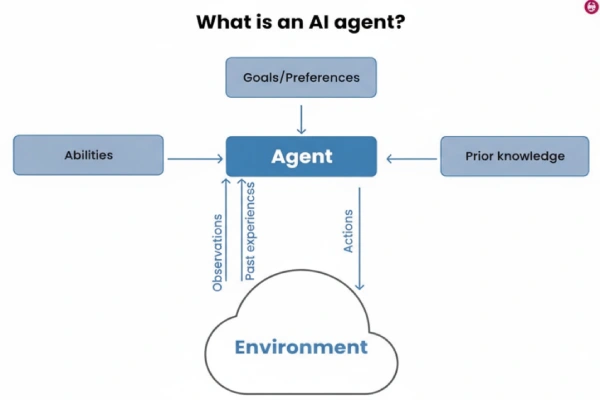
Key Features:
- Autonomy: Ability to act without human intervention.
- Goal-driven planning: Organizes tasks and decides how to accomplish them.
- Tool usage: Integrates APIs, databases, and other external systems.
- Adaptability: Learns from experience and improves.
Examples:
- The AI assistant schedules meetings and sends follow-up emails.
- Resolving customer service tickets end-to-end with artificial intelligence.
- Warehouse inventory can be managed by autonomous robots.
Traditional AI vs. Agentic AI
| Aspect | Traditional AI | Agentic AI |
| Role | Supportive, predictive | Autonomous, action-oriented |
| Autonomy | Reactive, responds to prompts | Proactive, initiates actions and plans |
| Dependence | Human-driven | Self-driven |
| Adaptability | Rigid rules, limited learning capacity | Contextual, learns and refines strategies |
| Scope | Narrow, single-task focus | Broad, multi-step workflows |
| Learning | Trained once, static use | Continuous learning & adaptation |
| Examples | Spam detection, recommendations | Workflow automation, autonomous agents |
Why This Shift Matters
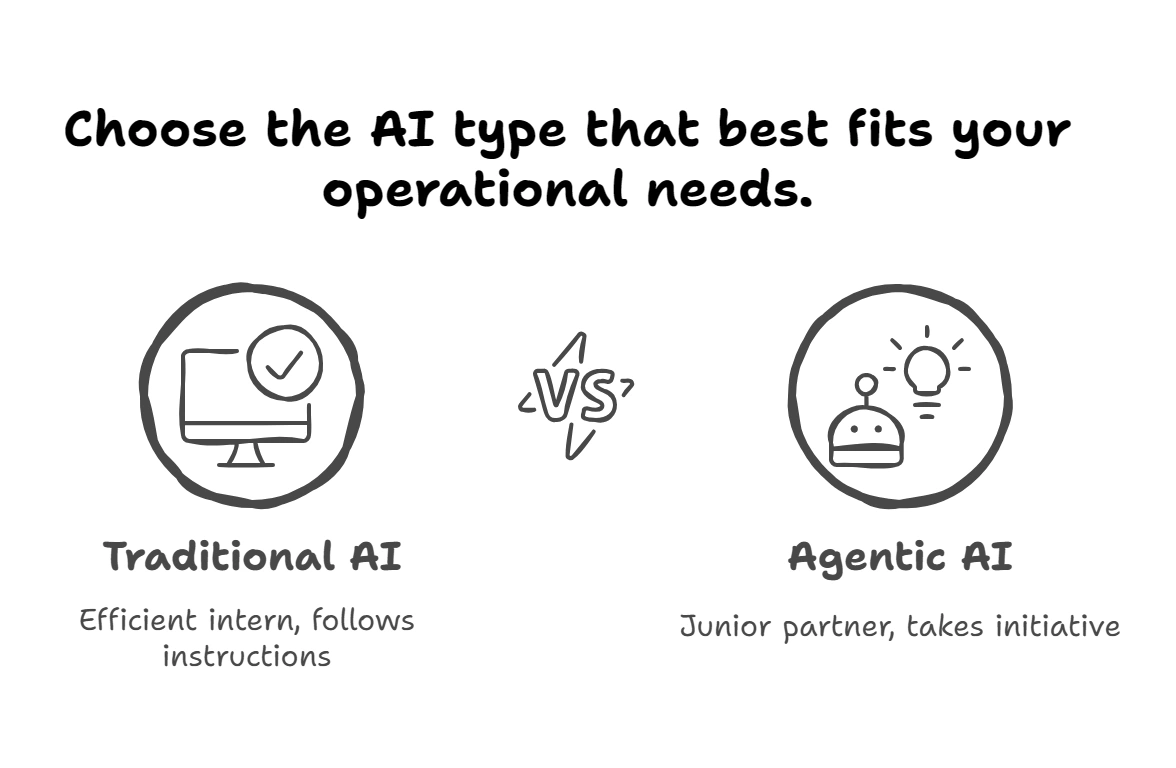
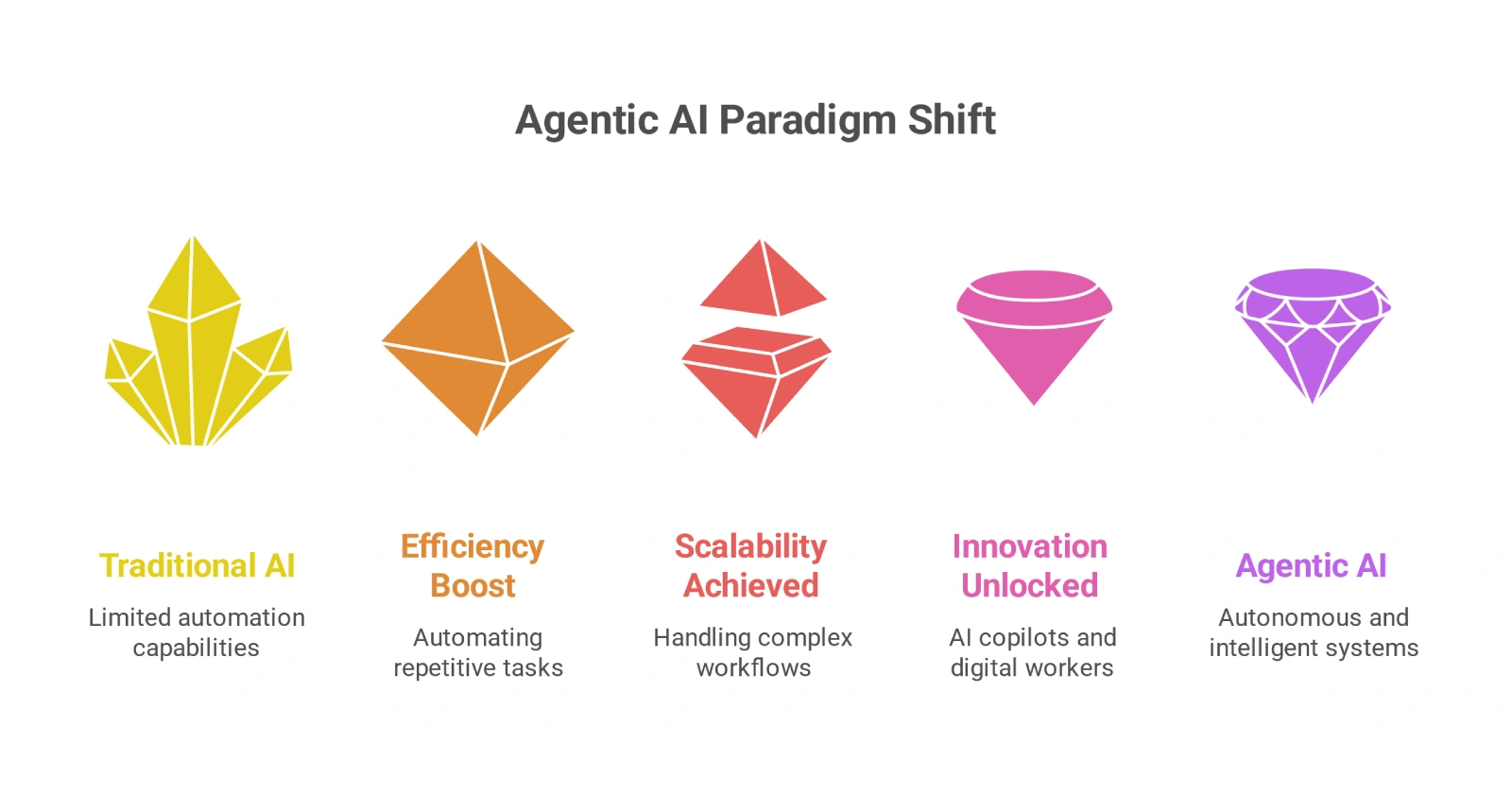
Agentic AI represents a paradigm shift, not just a technological upgrade.
- Efficiency: Automates repetitive, multi-step tasks.
- Scalability: Handles complex workflows without causing human bottlenecks.
- Innovation: Creates AI copilots, digital workers, and next-generation assistants.
- Risks: Autonomy raises concerns about accountability and mistakes
Real-World Impact and Enterprise Applications
Sectors are already being reshaped by agentic AI:
- Financial Services: Automated AI detects fraud, rebalances portfolios, and streamlines customer interactions.
- Healthcare: Automating monitoring, streamlining care coordination, and improving administrative efficiency can all be accomplished by virtual agents.
- Manufacturing: Artificial intelligence orchestrates supply chain logistics, optimizes production, and predicts maintenance requirements.
- Software Development: Agentic AI-powered developer studios generate code, validate user stories, and reduce test cycles in half.
Opportunities and Challenges
Opportunities
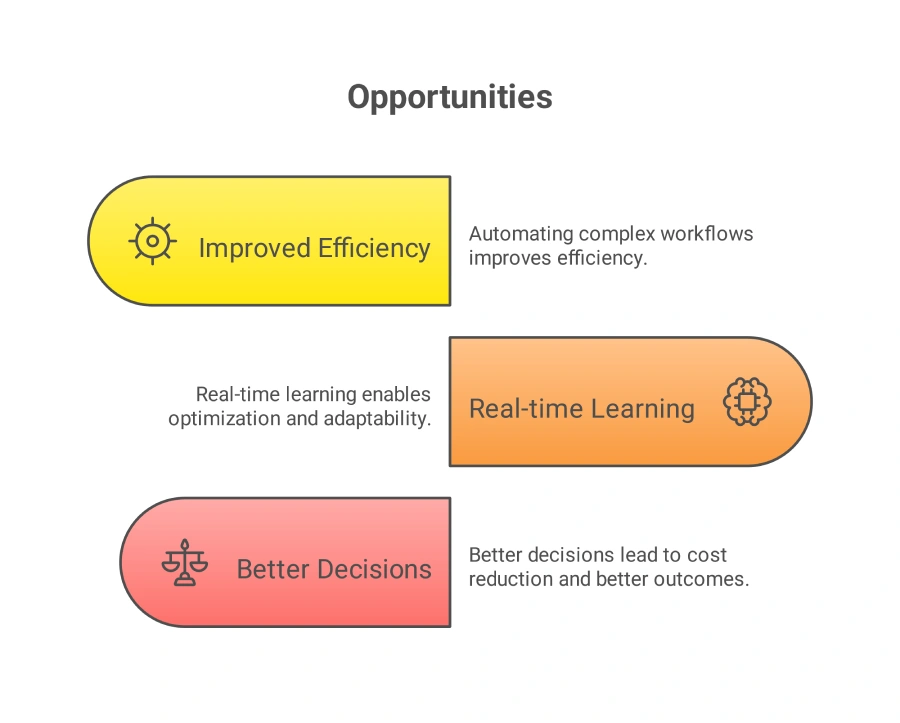
- Improved efficiency by automating cross-domain, complex workflows.
- Real-time learning, optimization, and adaptability.
- The ability to make better decisions, leading to a reduction in costs and better outcomes.
Challenges:
- Autonomy, accountability, and bias are ethical considerations.
- The transparency and explainability of decision-making processes.
- It is important to have a governance framework in place to ensure the deployment of software is safe.
Future Outlook
It is expected that agent-based AI will merge with High-Performance Computing (HPC), robotics, and multimodal learning to become even more powerful. In the near future,
- Healthcare: End-to-end management of patient workflows by AI agents.
- Finance: Real-time data-driven AI traders.
- Education: Personalized lessons and assessments provided by AI tutors.
- Smart Cities: Autonomous agents managing traffic, energy, and security.
However, the most promising vision is human-AI collaboration, where AI agents work alongside us rather than replace us.
Conclusion
The transition from traditional AI to agentic AI is a leap from machines that assist to machines that act. A decade of traditional AI has shaped how the world has worked, but the next decade is set to be defined by agentic AI.
As a result of this evolution, there are incredible opportunities, but also responsibilities. In reality, the question is not whether AI can act independently, but whether it can act ethically and responsibly.
With the advent of this new era, the challenge is clear: build agentic AI that works with us, not for us.